Nonprofits can still get the federal solar credit, as a payment. Elective pay, also called direct pay, survived the 2025 tax law and covers 30% of eligible costs for projects under 1 megawatt or that meet the labor rules. The deadline doesn't bend for nonprofits: a project that begins construction after July 4, 2026 has to be placed in service by December 31, 2027.
Want your name, logo or mission on the panels? Send us your logo and we'll mock it up on your panels, free.
Quick facts
- Direct pay: tax-exempt organizations get the value of the credit as a payment from the IRS (IRS)
- Credit: 30% of eligible costs for projects under 1 MW or that meet the prevailing wage and apprenticeship rules (IRS)
- Deadline: projects that begin construction after July 4, 2026 must be placed in service by December 31, 2027 (SEIA)
- Projects of 1 MW or more face US-made content rules that can reduce the payment (IRS)
- The payment comes after the system is placed in service, so the upfront cost needs savings, a loan or a grant
For nonprofits, soaring electricity bills could mean compromising essential community services. Solar energy is the ultimate solution for reducing operating costs and showing a nonprofit’s commitment to sustainability. But, what’s the best way to finance solar, and, what are the benefits of going solar for a tax-exempt organization?
How Can Nonprofits Pay For Solar Panels?
Considering the constrained budget for nonprofits, solar financing can be challenging. However, there are several financing options you can explore, including:
- Cash: Crowdfunding is a viable option for nonprofits to raise money for solar installation. While it may take time and mobilization efforts, it's possible to fund your solar project through fundraising within your community.
- Grants: You can get grants from state and federal governments or nongovernmental organizations. They vary from state to state and with the funding organization. For instance, the Rhode Island Commerce Corporation has a grant program for renewable energy-generating systems funding for-profit and nonprofit organizations in Rhode Island.
- Solar loans: Solar loans are available for nonprofits and are usually low-interest. This allows you to fund your project and pay the loan over an extended period.
- Business loans: Apart from solar loans, you can also secure a loan as a business to fund your solar installation. However, such loans may be more expensive than solar loans.
- PPA: Power Purchase Agreement is a contractual agreement where you acquire solar energy through a third party. You can find an investor to install solar on your property, and they'll charge you per kWh of energy.
- Solar lease: A solar lease works the same as PPA. However, instead of paying the investor per kWh, you'll pay a fixed monthly amount for using the system.

How Do Federal Solar Incentives Work for Nonprofits Now?
Nonprofits couldn't use the old federal solar tax credit because they don't owe income tax. The Inflation Reduction Act of 2022 changed that with elective pay, also called direct pay: a tax-exempt organization can receive the value of the credit as a payment from the IRS. Elective pay survived the 2025 tax law, but the solar credit itself now ends sooner.
The credit is worth 30% of eligible costs for projects under 1 megawatt or that meet the prevailing wage and apprenticeship rules. Bonus credits can add more, for example for US-made content or a site in an energy community, and each comes with its own paperwork. For projects of 1 megawatt or more, direct pay also comes with US-made content rules that can reduce the payment; most nonprofit rooftop projects are smaller than that.
In practice: a $100,000 project that qualifies for the full 30% brings a $30,000 payment after it's placed in service.
The deadline is the catch. Under the One Big Beautiful Bill Act, signed July 4, 2025, a solar project that begins construction after July 4, 2026 has to be placed in service by December 31, 2027 to qualify. Projects that began construction by July 4, 2026 generally have four calendar years to finish.
Direct pay goes to the system's owner. If a third party owns the system under a lease or a power purchase agreement (PPA), the owner claims the credit, and the nonprofit's benefit comes through the price in the contract.
What Is The Federal Direct Pay Option For Nonprofits?
Direct pay lets a tax-exempt organization receive the credit as cash. The organization registers the project with the IRS before filing (pre-filing registration), then claims the payment on its return for the year the system is placed in service. The money arrives after the project is finished, so plan to cover the upfront cost with savings, a loan or a grant.

Primary Ownership Vs. Third-Party Ownership Of Solar
Nonprofits have two options when it comes to solar ownership:
Primary ownership - The nonprofit becomes the direct owner by purchasing and installing the solar power system on the organization’s property.
Third-party ownership - The nonprofit enjoys the energy savings of solar with no upfront costs through a third-party solar lease or power purchase agreement.
Primary ownership
Pros
- You'll get a better return on investment, enjoying lower electric bills and reduced operating costs once you achieve an ROI on the system.
- Solar installation improves your property's value and your brand perception.
- You can earn extra income through Solar Renewable Energy Certificates (SRECS) or
- You can claim the federal credit as a direct payment, if the project meets the deadlines.
Cons
- The upfront investment is expensive.
- You have to handle maintenance and repair costs.
- The permitting, installation, and financing process can be tedious.
Third-party ownership
Pros
- You'll enjoy energy efficiency without worrying about hefty upfront investment costs.
- You’ll save on energy costs by paying an agreed upon fixed rate for electricity each month.
- The third-party owner handles repairs and maintenance.
Cons
- There is no return on investment since you don’t own the system.
- You'll have to follow the contractual terms on energy consumption, and you’re locked into the agreement for the agreed upon term (typically 15-25 years).
- You miss out on extra income and property value.
Benefits Of Nonprofits Going Solar
Nonprofits have a lot to gain by adopting solar energy use. Benefits include:
- Energy independence: Solar is an excellent option to lower electricity costs. As an organization, you will enjoy low or no electricity bills depending on your solar installation. This means you can focus more resources on running community-based projects and filling your nonprofit’s mission.
- Serve your community: If you opt for battery storage with your solar system, you can store excess energy and run critical components even during power outages. This could enable you to further serve your community by providing shelter and services during storms and outages.
- Built-in branding space: You can enhance your nonprofit branding by incorporating SolarSkin technology on your solar panels. Custom SolarSkin overlays turn your rooftop or ground-mounted solar system into a vibrant branding space for your name, logo, or artistic imagery that represents your organization’s mission.
- Improved brand perception: Generating clean energy is a great way to showcase your nonprofit’s commitment to sustainability. You’ll attract new like-minded investors, employees, and volunteers that prefer to work with environmentally-conscious organizations.
Schools, campuses and community organizations also use their arrays to show their mission. SolarSkin puts a logo, a mascot or a mural on the panels; see solar for schools and campuses.
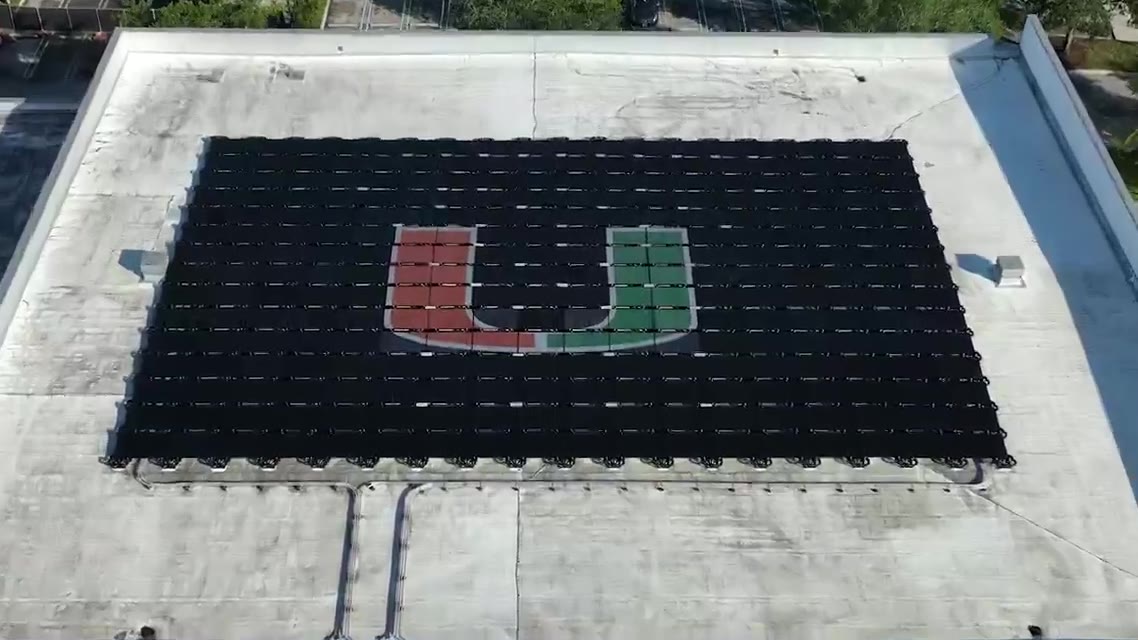
Project: the University of Miami's U, in the school's colors, on a rooftop array on campus.
Want your mission on your panels? Send us your logo and we'll mock it up, free.
Tax rules change. This guide reflects the law as of November 2026; check the details for your project with your tax advisor. More: the IRS on elective pay.
What to Watch Out For
- Direct pay arrives after the system is placed in service, not before. Line up the cash for the build.
- Register the project with the IRS before you file. Pre-filing registration comes first, then the claim on the return for the year the system goes into service.
- With a lease or a power purchase agreement, the system's owner claims the credit. Ask how it shows up in your price.
See your name or logo on your panels before you decide. Send it over and we'll send back a mockup.
FAQ
Can a nonprofit get the federal solar tax credit?
Yes, through elective pay, also called direct pay. The IRS pays a tax-exempt organization the value of the credit: 30% of eligible costs for projects under 1 megawatt or that meet the prevailing wage and apprenticeship rules.
When does a nonprofit's solar project have to be finished?
If construction begins after July 4, 2026, the system has to be placed in service by December 31, 2027 to qualify. Projects that began construction by July 4, 2026 generally have four calendar years.
Does direct pay work with a solar lease or a PPA?
The credit goes to the system's owner. Under a lease or a power purchase agreement, the third-party owner claims it, and the nonprofit's benefit comes through the price in the contract.
When does the direct payment arrive?
After the project is finished. The organization registers the project with the IRS before filing, then claims the payment on its return for the year the system is placed in service.
Sources
- IRS: elective pay and transferability
- IRS: clean electricity investment credit
- SEIA: solar tax policy
- Lawyers for Good Government: elective pay
- EPA: solar renewable energy certificate markets
Next reads: Solar for schools and campuses · Solar panel branding · Solar tax incentives for businesses